




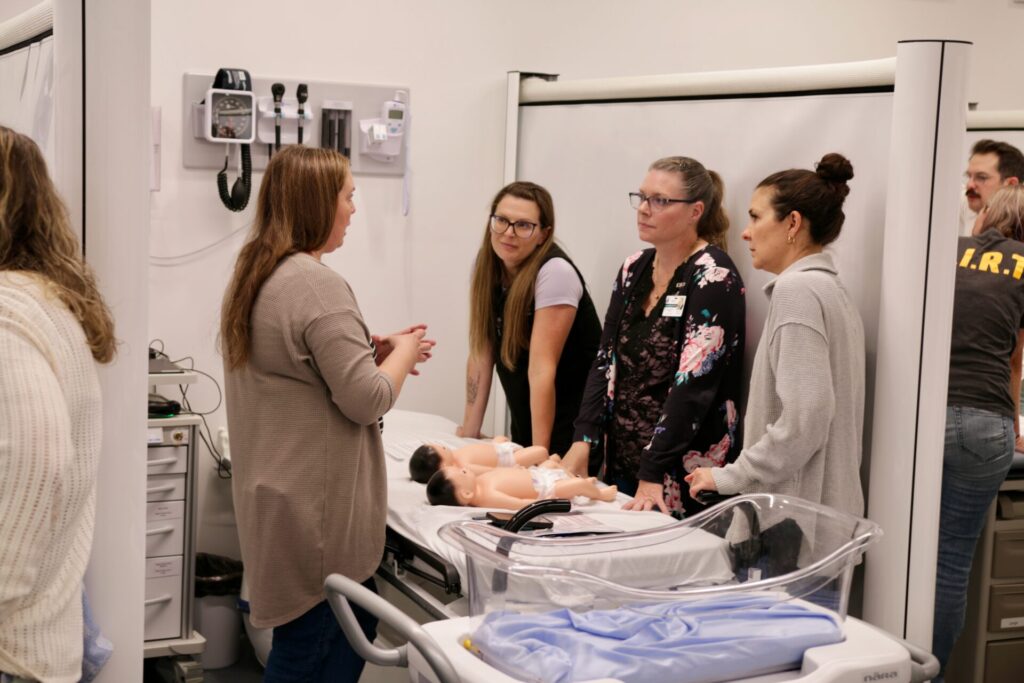
In the Thompson Region, the future of primary care is already taking shape. At the core of this effort is Thompson Rivers University’s (TRU) Master of Nursing – Nurse Practitioner (MN-NP) program, which is helping build a stronger healthcare workforce in the Thompson Region.
“The program trains NPs with regionally tailored clinical experience and develops rural and remote competencies that address local healthcare needs,” shared Gina Guerrero, Academic and Administrative Coordinator, Practicum Experiences, School of Nursing, TRU. “Clinicians trained within the region are more likely to remain and practice locally, as the program fosters strong community connections.”
As demand for care grows, particularly for chronic disease management, the MN-NP program is helping expand capacity in meaningful ways.
“For one, it increases capacity for primary care and chronic disease management, which helps reduce pressure on emergency departments and specialist waitlists,” added Guerrero.
Just as importantly, it also helps expand team-based care options and improve system resilience by integrating NPs into collaborative practice alongside Family Physicians, Nurses, and allied health professionals.
But there’s a critical piece that can’t be taught in a classroom – real-world clinical experience. That’s where preceptors come in.
Preceptors, which include not only other NPs but also Family Physicians, are essential to shaping the next generation of NPs.
“Preceptors provide hands-on clinical supervision and model diagnostic reasoning, clinical workflows, prescribing practices, and interprofessional collaboration,” shared Dr. Mary Pickering, NP, Assistant Teaching Professor, MN-NP Program Co-Coordinator & Clinical Lead, School of Nursing, TRU.
In doing so, they bridge the gap between theory and practice, exposing students to real patient panels, clinical complexity, and continuity of care that cannot be fully replicated in classroom simulations, ultimately helping them build the confidence and competence they need to work independently.
“They play a key role in shaping students’ understanding of local health system pathways, referral processes, and community resources,” added Amanda Ried, NP and Practicum Lead for MN-NP, School of Nursing, TRU. “Preceptors also serve as professional role models, influencing students’ confidence, clinical judgment, and long‑term practice patterns.”
For NP students, the qualities they see in a preceptor often define the kind of clinician they become.
“Students seek preceptors who demonstrate clinical competence, clear communication, constructive feedback, and holistic, team-based care,” shared Guerrero.
In turn, students emulate clinical reasoning, professional behaviours, and patient care approaches, shaping not only their own practice, but their willingness to teach the next generation.
Beyond this, preceptorship today often translates into patient attachment and access tomorrow.
“Preceptorship helps ensure that new NPs are trained in community‑specific needs, improving patient outcomes and strengthening trust in local primary care services,” noted Ried, adding that students who complete supervised placements may often assume responsibility for attached patients after licensure, building referral networks and fostering community trust, which facilitates quicker integration into practice.
As a result, more clinicians become available to accept new patients, directly improving access to care.
Clinics benefit from this program as well, as those that host students often find it easier to recruit and retain new graduates.
“Students already understand clinic culture, workflows, and patient population needs,” noted Ried, making the transition from learner to colleague far smoother.
In a time of provider shortages and rising care demands, the role of preceptors is more critical than ever.
“A shortage of preceptors could delay NP students’ graduation and licensure, slowing the expansion of the healthcare workforce. These delays can have broader impacts, including longer wait times, increased strain on emergency departments and specialists, and persistent gaps in access to primary care,” explained Pickering.
There is also a risk of losing future talent. Without sufficient preceptorship opportunities in the local region, some NP students may be forced to complete clinical training elsewhere.
For those considering becoming preceptors, even a small commitment can make a meaningful difference. TRU provides support throughout the process, including orientation, assessment tools, administrative assistance, and honoraria to reduce barriers.
“Even short or focused clinical placements, including in primary care, urgent care, or specialty settings are valuable. Physicians do not need to precept full-time to make a meaningful difference,” emphasized Pickering. “Even a few supervised placement shifts can lead to sustained increases in regional healthcare capacity.”
Strengthening the healthcare workforce in the Thompson Region is a shared effort already underway. For Family Physicians, taking on a preceptor role for NP students is one of the most direct ways to support that progress. By teaching today’s students, preceptors help ensure more patients, in more communities, can access the care they need in the future.
For more information on becoming a preceptor, please reach out to mnnpclinical@tru.ca or visit tru.ca/mnnppreceptorship.
