





Every medication prescribed in long-term care should have a clear purpose and meaningful benefit for the resident.
Gemstone Care Centre, the Thompson Region Division of Family Practice (TRDFP) and Interior Health are working together to review medications, strengthen collaboration among care teams and support more person-centred approaches to care — helping residents stay engaged, connected and able to enjoy daily life.
For some residents in long-term care, antipsychotic medications play an important role in managing certain symptoms and conditions. But medications can also change over time as a resident’s needs change. Regular reviews can help care teams and Most Responsible Providers (MRPs) determine whether each medication continues to be appropriate and beneficial for the individual resident.
Through the Appropriate Use of Antipsychotics (AUA) initiative, Gemstone and its partners are making medication review and interdisciplinary collaboration part of ongoing care — while exploring additional ways to support residents’ quality of life.
From an idea to action
In January 2025, the AUA initiative was highlighted through the Sparking Change in AUA webinar series offered by Healthcare Excellence Canada (HEC). The national initiative grew from collaboration among the Canadian Institute for Health Information (CIHI), Choosing Wisely Canada and the Appropriate Use Coalition.
Inspired by the practical tools and collaborative learning shared through the initiative, Amy Brauner, Care Manager at Gemstone Care Centre in Kamloops, led the development of an AUA quality improvement project at the home.
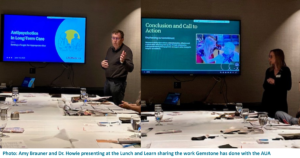
The goal was to take a closer look at antipsychotic use, review each resident’s individual clinical needs and identify opportunities to safely adjust medications where appropriate — while creating a sustainable process for ongoing review.
The Gemstone team took an interdisciplinary approach, bringing together nurses, MRPs, pharmacists and other care-team members. Alongside medication reviews, the team focused on education, meaningful engagement and creating more opportunities for residents to stay active, connected and involved in their community.
Putting residents first
CIHI has set a national goal for long-term care homes of reducing antipsychotic use to 15 per cent or less. At Gemstone, the team initially set a goal of reducing inappropriate antipsychotic use to 20 per cent.
Dr. James Howie, a member of the project committee, said the first step was understanding how antipsychotic medications were being used and whether they continued to meet each resident’s needs.
“Monthly meetings were held with Gemstone management to review all residents on antipsychotics and determine if their usage was appropriate according to the national guidelines,” Dr. Howie explained. “If it was not, we would approach the Most Responsible Providers (MRPs) to determine if tapering down usage and ultimately coming off these medications was appropriate.”
The process was individualized. Rather than applying a one-size-fits-all approach, nurses, MRPs and pharmacists worked together to consider each resident’s circumstances, clinical needs and potential benefits and risks before making any medication changes.
The team also expanded opportunities for residents to stay engaged and connected through activities and programs that support their well-being.
These included music therapy, pet therapy and the Mother Goose intergenerational program, which brings young families together with residents for songs, stories and shared activities.
“We have a music therapist, as well as volunteers who bring in their dogs for pet therapy, and the residents enjoy gathering together to sing and spend time with the animals,” said Brauner. “We also host Mother Goose sessions, which is a great opportunity for connection between the community, the kids and the residents. They get to come, sing, play and have fun.”
Seeing the difference
As medications were carefully reviewed and adjusted, staff noticed changes in some residents.
“We have a handful of residents that really benefited from it physically and mentally; they were less lethargic and able to participate more in recreation programs. Their communication also improved, and the risk for falls, if they were ambulatory, decreased,” Brauner said. “For others, the changes were smaller and harder to measure, but we knew they were benefiting.”
By February 2026, Gemstone had reduced inappropriate antipsychotic use from approximately 35 per cent to 23 per cent — moving closer to its 20 per cent goal.
The project also established an ongoing process for reviewing medication use, including for every new resident admitted to the home. This helped make medication review part of routine care rather than a one-time project.
Sharing what works
The experience at Gemstone also created an opportunity to share what the team had learned with other long-term care homes in the Thompson region.
With financial and administrative support from the Division’s Long Term Care Initiative, Dr. Howie began sharing Gemstone’s experience and supporting other facilities interested in undertaking similar quality improvement projects.
“With our Quality Improvement funding, we were able to help take the work done at Gemstone and share the findings with other Kamloops facilities,” said Ania Zubrowska, Project Manager with the Division. “This includes setting up new protocols, information sessions, supporting staff training and supporting MRPs.”
One of the first organizations to adopt the approach was Overlander Long-Term Care, owned and operated by Interior Health.
Dr. Howie introduced the project to MRPs providing care at Overlander, sharing the evidence behind appropriate antipsychotic use and the practical processes developed at Gemstone.
David Haastrup and Adigo Angela Achoba-Omajali, Overlander’s Co-Managers of Clinical Operations, said the project encouraged providers to consider why a resident was receiving an antipsychotic and whether it remained the best option for that individual.
Overlander already had established interdisciplinary meetings on Wednesdays. Beginning in January 2026, medication reviews were added to the existing agenda, bringing together occupational and physical therapists, recreational therapists, MRPs, pharmacists, social workers, the volunteer coordinator and nurses.
“Every Wednesday, the team reviewed the residents receiving and coming off of antipsychotic medications with Angelina Anderson, one of Overlander’s Long Term Care Coordinators, and discussed whether those medications continued to meet each person’s clinical needs,” Haastrup explained.
Within three months, antipsychotic use at Overlander fell from 42.1 per cent to 26.8 per cent.
The project also established an ongoing process for monitoring medication use, with Nurse Managers identifying potential concerns and bringing them forward to MRPs for review.
Building lasting change
For Brauner, the most important lesson from the project is that this work cannot be a one-time initiative.
“This is a forever project,” she said. “Medication reviews, pharmacy involvement and interdisciplinary discussions all need to become part of everyday practice.”
That approach is helping make medication review a routine part of care while strengthening collaboration among MRPs, nurses, pharmacists and other care-team members.
Ultimately, the AUA initiative is about more than numbers. It is about taking the time to understand each resident’s needs, ensuring medications continue to serve a meaningful purpose and creating opportunities for residents to be more alert, engaged and connected in their daily lives.
By making thoughtful medication reviews and collaborative care part of everyday practice, long-term care teams across the Thompson region are helping create environments where residents can experience the best possible quality of life.
