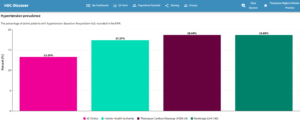



Using Practice Data to Drive Hypertension Quality Improvement
Following our recent Hypertension in Primary Care education session in May, the Thompson Region Division of Family Practice hosted a follow-up webinar focused on data-informed quality improvement (QI) in primary care. This session, recorded and now available to watch, highlights a local hypertension QI project led by Dr. Steven Broadbent in collaboration with the Practice Support Program (PSP) and Health Data Coalition (HDC).
At its core, the project set out to answer a simple but important question: how can we use the data already in our EMRs to improve care? With hypertension acting as a common thread across many chronic conditions, the team chose it as a “proof of concept” to test a practical, team-based QI approach that included a Primary Care Network RN, with potential to later expande to areas like diabetes and chronic kidney disease.
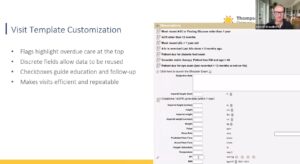
Using PSP support, the clinic developed targeted patient lists, structured visit templates, and streamlined workflows to support consistent hypertension care. HDC data provided a broader lens — helping to validate assumptions about patient complexity, highlight opportunities for improvement, and track changes over time. Early results show that improvements begin with better documentation and identification, with downstream gains in patient management and outcomes.
Over a three-month pilot, the clinic completed 65 hypertension-focused visits across 40 patients, demonstrating that structured, data-driven approaches can be integrated into routine practice. While the work required some additional coordination and workflow adjustments, the team noted strong patient engagement and meaningful improvements in consistency of care — reinforcing that small, focused changes can have measurable impact.
Most importantly, this project demonstrates that QI doesn’t need to be complex or overwhelming. With the right supports, it can be embedded into everyday clinical work — helping teams identify gaps, standardize care, and continuously improve outcomes for their patient populations.
Key takeaways from this project
- Start with one area (e.g., hypertension) — small, focused changes are easier to test and sustain
- Good data matters — accurate coding and documentation are the foundation for meaningful QI
- Templates and workflows help standardize care and make visits more efficient and repeatable
- Team-based approaches improve engagement, with patients responding well to additional supports
- Improvement follows a pattern: documentation → identification → management → outcomes
- What works in one clinic can be spread — this model is designed to be replicable

Explore the sessions
 Data-Informed Hypertension QI in Primary Care (June webinar recording)
- Hypertension in Primary Care (May education session – full recording)

Looking to get started?
- Connect with Practice Support Program for support with QI projects, EMR workflows, and panel management
Get in touch: Chelsey – cmckinney@doctorsofbc.ca | Sara – sbecker@doctorsofbc.ca - Explore Health Data Coalition to better understand your practice data in a regional and provincial context
Get in touch: Frank – frank.fabian@hdcbc.ca - Remember: PCN team members are available to support referrals for hypertension and chronic condition care